
The Day the Mountain Moved
On May 31, 1889, the South Fork Dam failed. In 10 minutes, a wall of water, trees, and buildings traveling at 40 miles per hour erased a city of 30,000.

The South Fork Dam had been showing signs of weakness for years. Engineers warned. Letters were written. The dam held 20 million tons of water in Lake Conemaugh, 14 miles upstream from Johnstown. It was owned by the South Fork Fishing and Hunting Club — a private resort whose members included Andrew Carnegie, Henry Clay Frick, and Andrew Mellon. Maintenance had been deferred. The spillway had been filled in to allow carriages to cross. Fish screens prevented the overflow pipes from clearing. When three days of record rainfall began on May 28, 1889, the end had already been written.
“The water is over the breast of the dam and it is becoming dangerous.”— Colonel Unger telegram, 11:52 AM May 31, 1889
At 3:10 PM on May 31, 1889, the South Fork Dam failed catastrophically. The 72-foot tall earthen dam collapsed and Lake Conemaugh — 2 miles long, 1 mile wide, and 60 feet deep — drained entirely in 36 minutes. A wall of water, trees, railroad cars, houses, and debris 30 to 40 feet high moved down the Conemaugh Valley at 40 miles per hour. It carried the weight of a naval fleet.
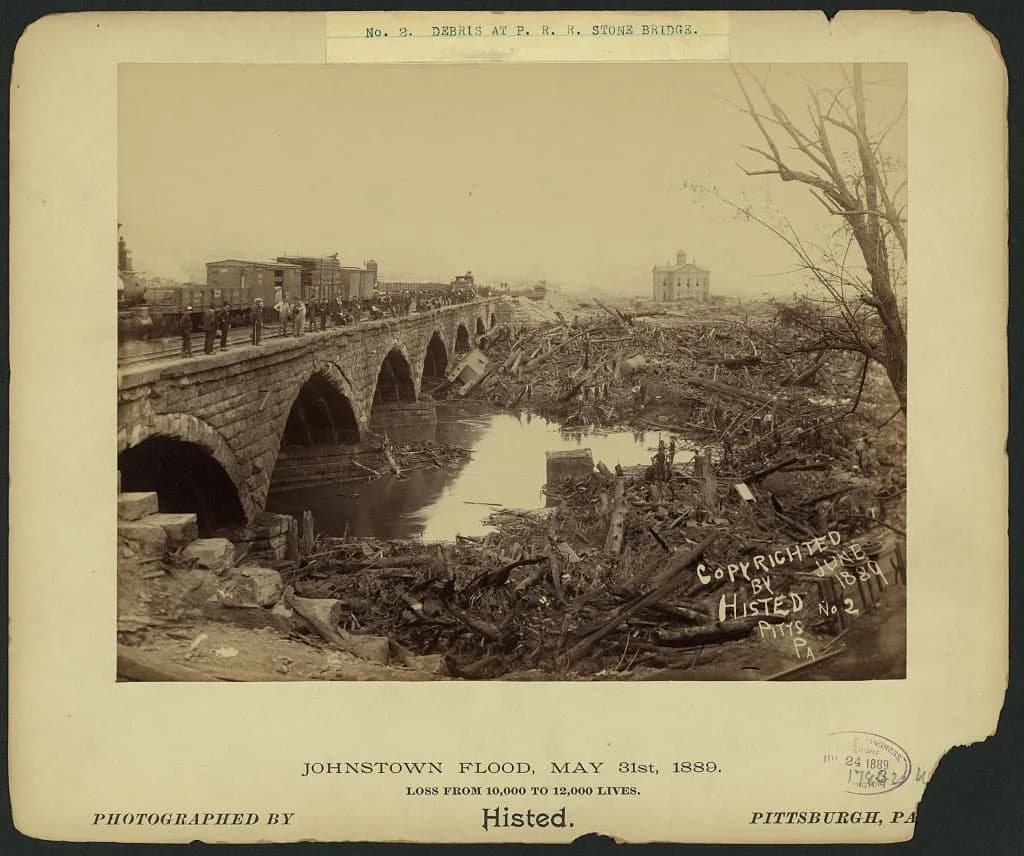
Debris piled against the Stone Bridge in Johnstown after the 1889 flood
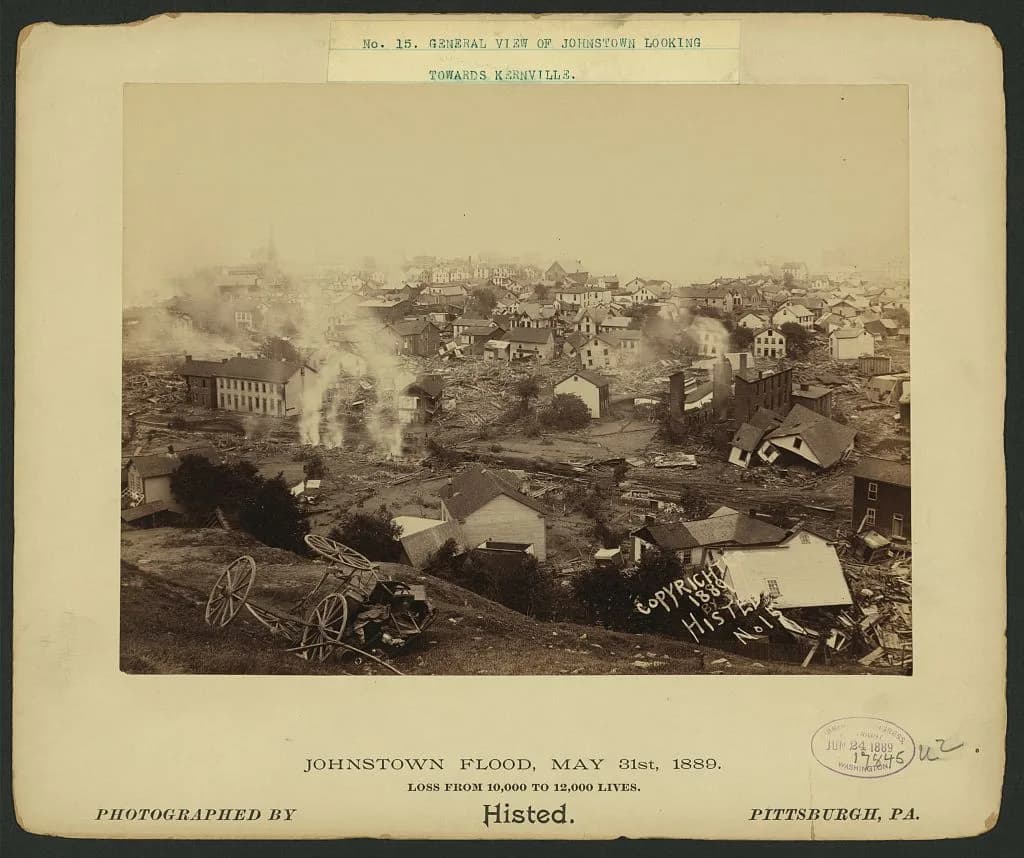
Panoramic view of destruction in Kernville after the 1889 flood
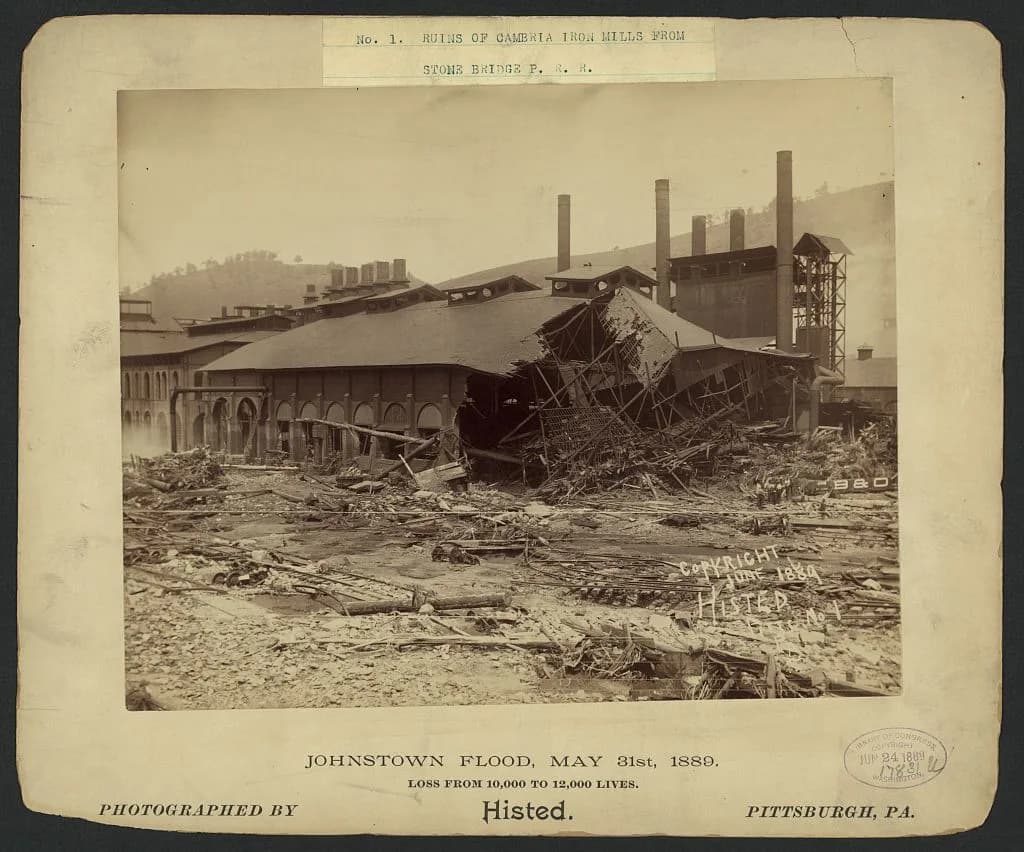
Ruins of the Cambria Iron Mills after the 1889 flood
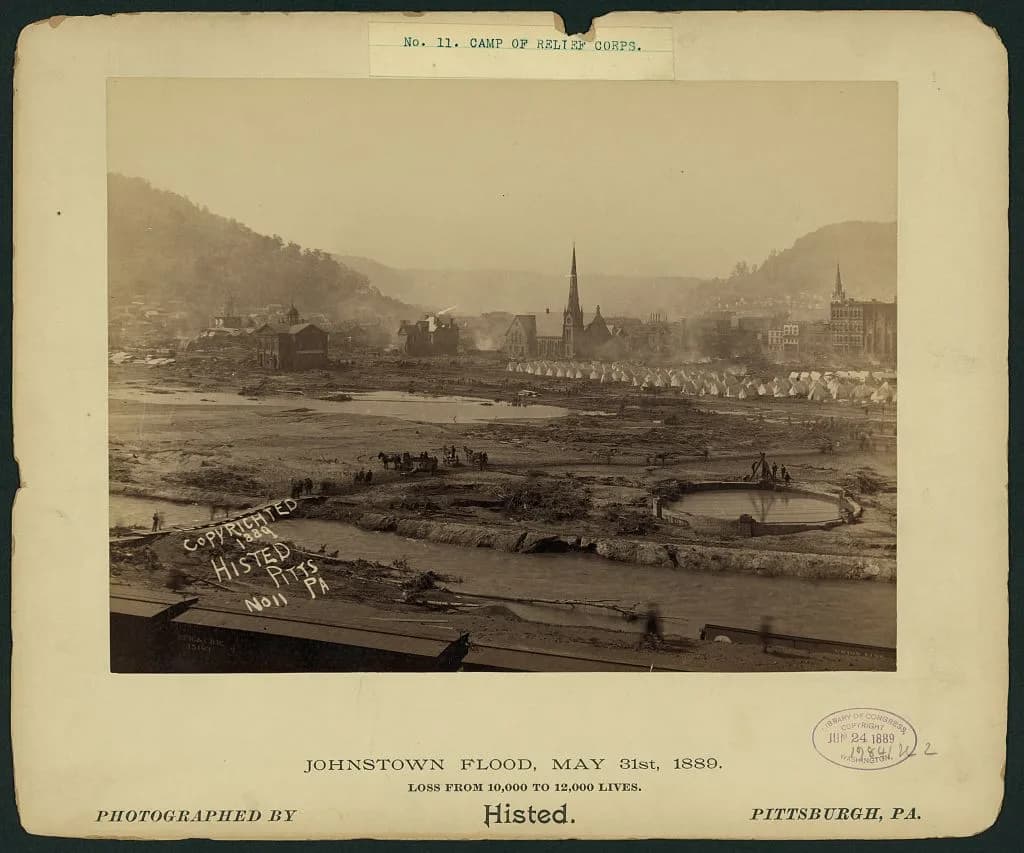
Camp of the Relief Corps in Johnstown after the 1889 flood
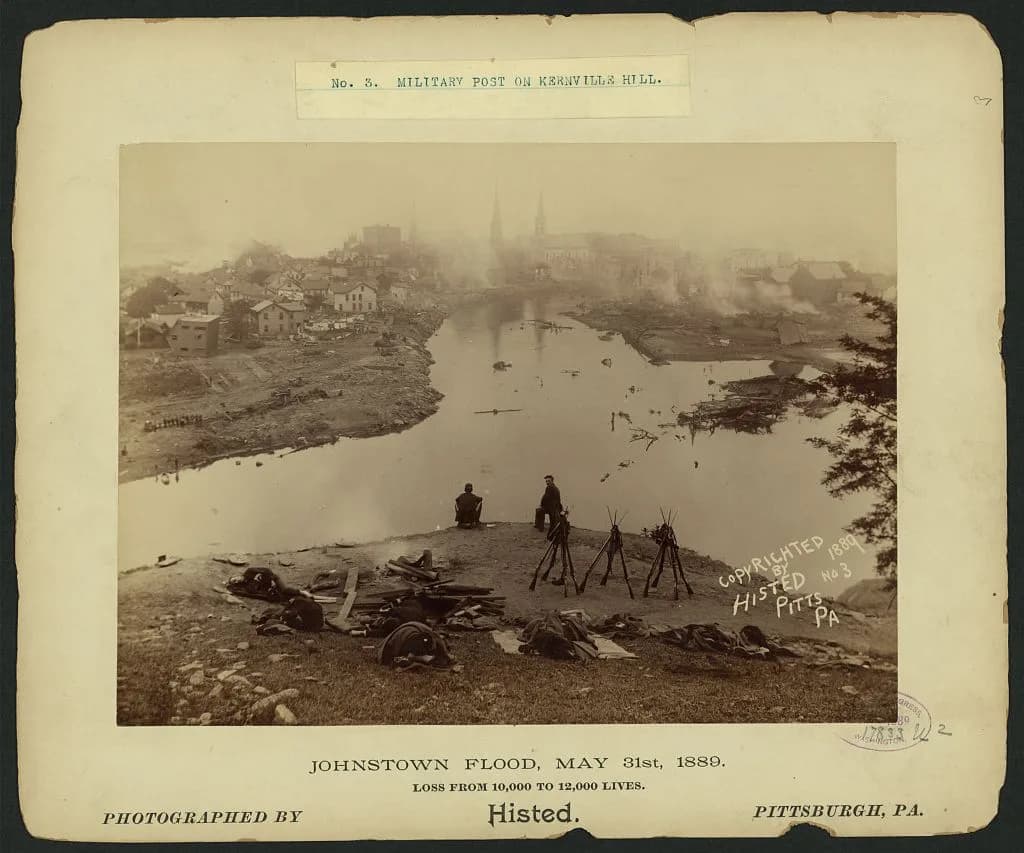
Military post on Kernville Hill overlooking the flood destruction
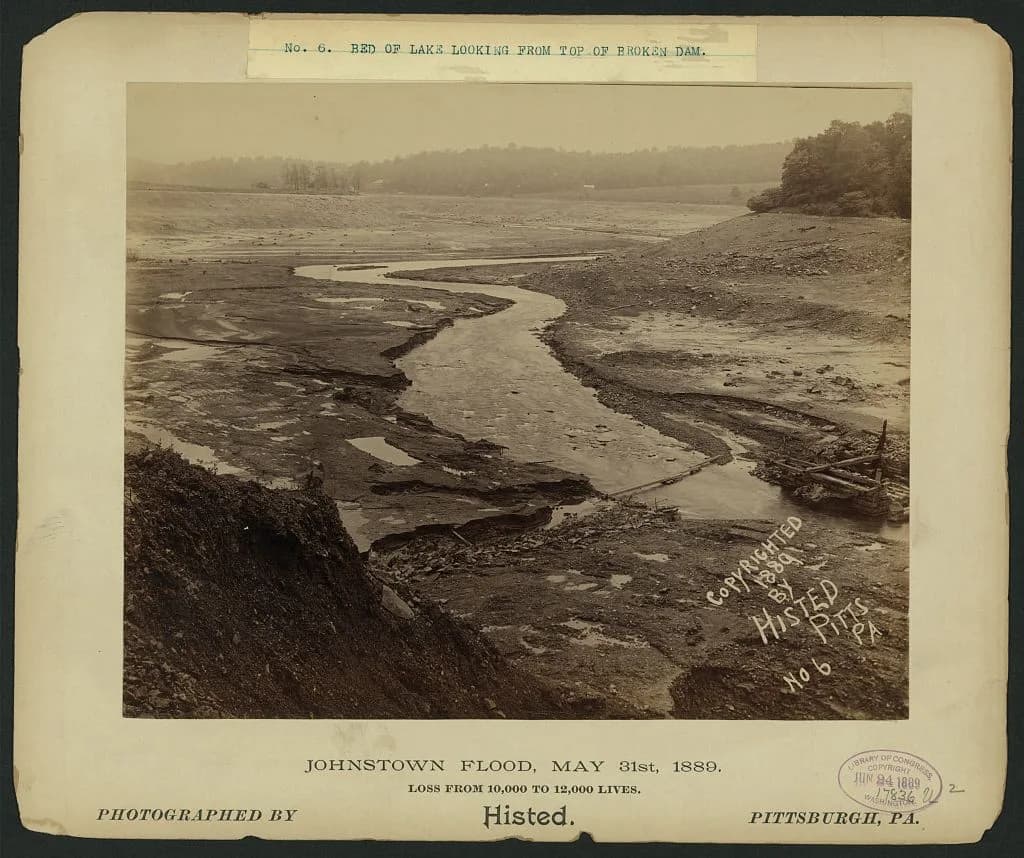
The empty bed of Lake Conemaugh seen from the broken dam
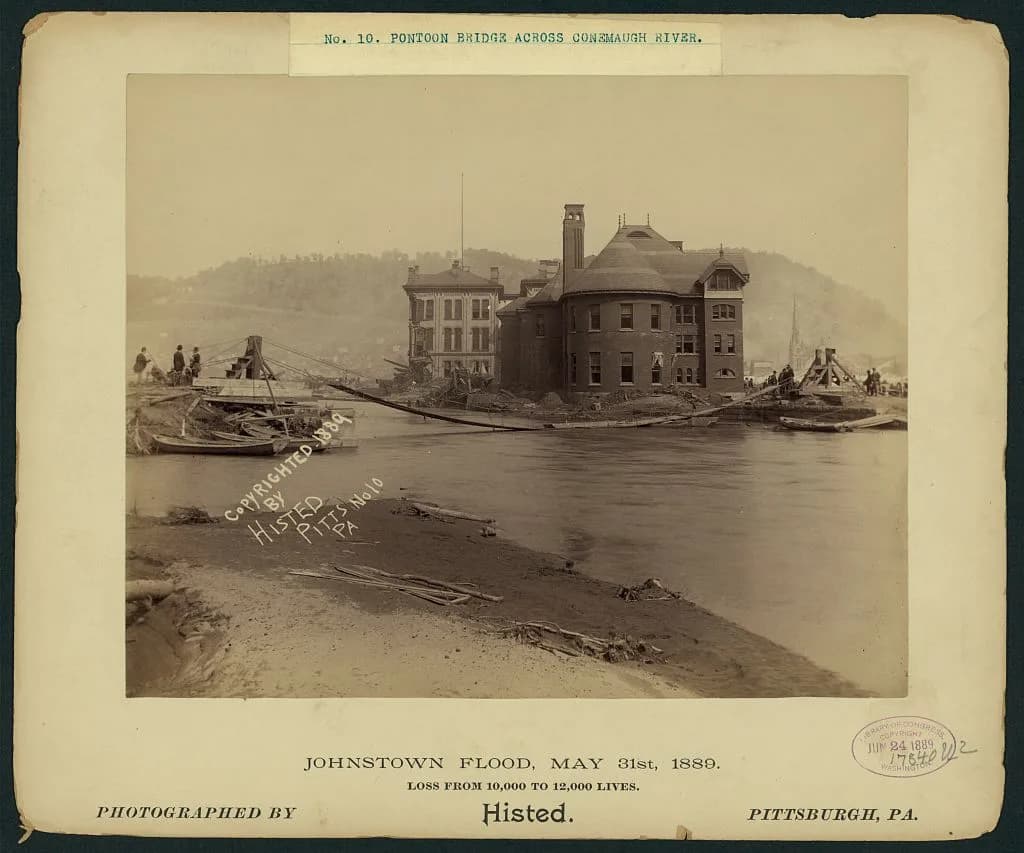
Pontoon bridge constructed across the Conemaugh River
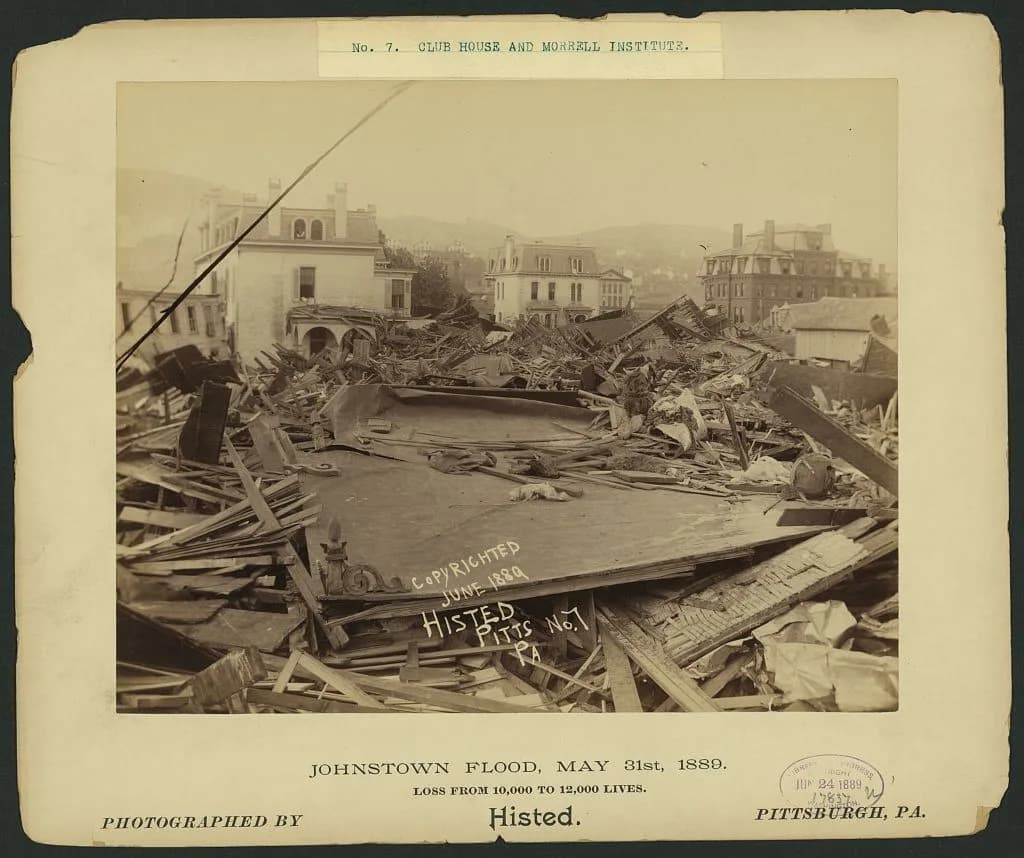
Ruins of the Club House and Morrell Institute
General view of the massive debris field covering Johnstown
View looking down Main Street after the flood waters receded
The breach in the South Fork Dam that released the flood
Johnstown steelworker housing in 1935
60 FEET
Peak flood water height — May 31, 1889 — 4:07 PM
The flood wave hit Johnstown at 4:07 PM. Downtown vanished in minutes. The wave compressed the city — whole neighborhoods driven toward the Stone Bridge and piled against it. When debris at the bridge caught fire that night, hundreds who had survived the wave burned in the wreck. In the darkness after, people stood on rooftops, on drifting piles of wood, calling out names. No answer came for 2,208 of them.
“There is no calamity in modern times that equals this in the rapidity and terribleness of the destruction.”— New York World, June 1, 1889
South Fork Dam completed
Dam sold to Fishing & Hunting Club
May 31: The Great Flood
June 5: Clara Barton arrives
Rebuilding complete

The Mills They Couldn't Drown
The Cambria Iron Works, which had produced America's first steel rails just 22 years before the flood, was devastated but not destroyed. The furnaces were rebuilt within months. Bethlehem Steel would later acquire these same mills and run them until 1992. The flood that killed 2,208 people could not kill the industrial character of Johnstown.
Clara Barton arrived on June 5 with 50 Red Cross volunteers. She stayed five months. Eighteen foreign nations sent aid. Within weeks, relief trains were arriving daily. Within two years, Johnstown had rebuilt. The Cambria Iron Mills — birthplace of American steel rail, employer of 12,000 — were producing steel again within months. No legal accountability was ever established against the South Fork Fishing and Hunting Club. Andrew Carnegie donated a new library.
Debris piled against the Stone Bridge in Johnstown after the 1889 flood
Panoramic view of destruction in Kernville after the 1889 flood
Ruins of the Cambria Iron Mills after the 1889 flood
Camp of the Relief Corps in Johnstown after the 1889 flood
Military post on Kernville Hill overlooking the flood destruction
The empty bed of Lake Conemaugh seen from the broken dam
Pontoon bridge constructed across the Conemaugh River
Ruins of the Club House and Morrell Institute
General view of the massive debris field covering Johnstown
View looking down Main Street after the flood waters receded
The breach in the South Fork Dam that released the flood