
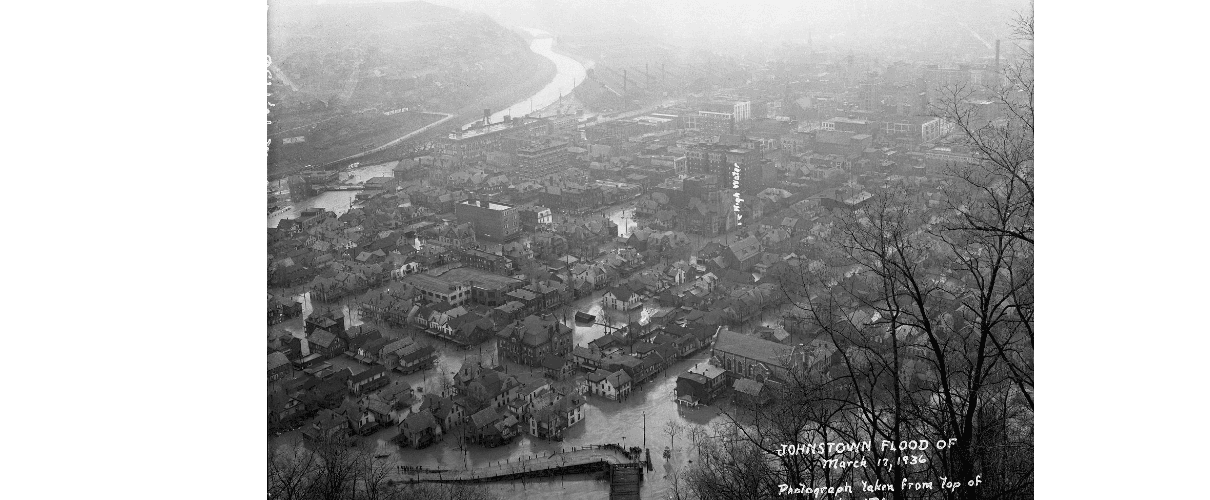
The St. Patrick's Day Flood
On March 17, 1936, warm temperatures melted deep snowpack while three days of rain fell. The rivers rose 14 feet, submerging the downtown.

St. Patrick's Day morning — snowpack across the Alleghenies melting, three days of rain saturating the ground, every tributary full. The Stony Creek and Little Conemaugh rose simultaneously. Unlike 1889, there was no single structural failure — this was the valley's geography and weather conspiring directly.
St. Patrick's Day Flood of 1936 — Downtown Johnstown Inundated

The Johnstown Inclined Plane, which evacuated 4,000 people in 1936

Housing conditions in Johnstown just prior to the 1936 flood
Streets flooded to rooftop level in low-lying neighborhoods. The Inclined Plane — built in 1891 partly as a result of 1889 lessons — operated continuously to evacuate residents to Westmont hill. It carried 4,000 people to safety.
March 17: Rivers rise 14 feet
4,000 evacuated via Inclined Plane
FDR authorizes Army Corps project
Channelization begins
River walls completed

The Furnaces Stayed Lit
Bethlehem Steel's Johnstown mills operated through the 1936 flood. The steel industry's infrastructure — built at higher elevations than residential neighborhoods — largely survived. Steelworkers returned to the mills within days. In the context of the Great Depression, keeping the mills running was existential for the city's economy.
FDR's administration responded. The Army Corps began the channel project that would reshape the rivers through Johnstown. Johnstown's residents believed they had solved the flood problem. They had not.